Significance
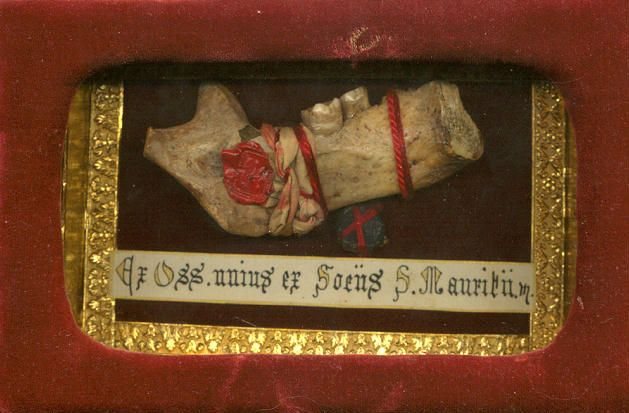
Relics of this size, known as distinguished relics, are exceedingly rare outside of a church or monastery. These come from one of the companions of St. Maurice: the Coptic Christian soldiers of the Theban Legion, who chose martyrdom around the year 290 A.D. rather than offer sacrifices to the Roman gods.
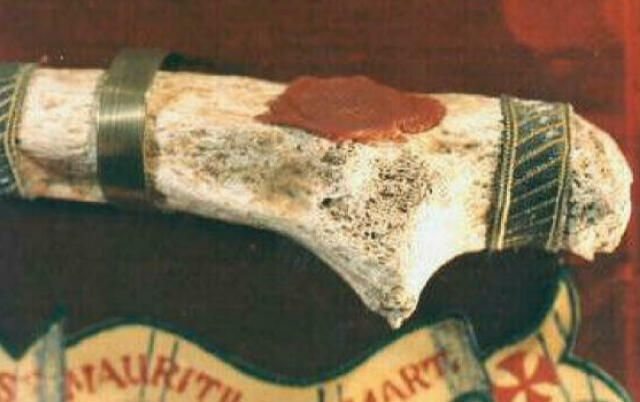
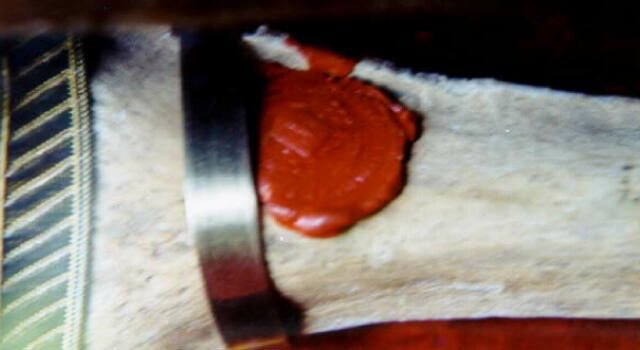
Their wax seals tell the story of their journey. An abbot's seal from Sainte Sixte, a 12th century French monastery, is joined by a later bishop's seal, probably applied after the relics reached Canada some 150 years ago. After almost twenty years in obscure storage at the Galleries de Roy in Quebec, they once again have a place of honor.
Photos
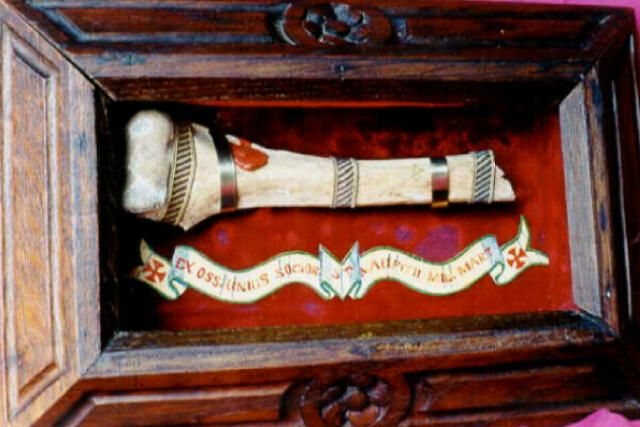
The inscription and seals
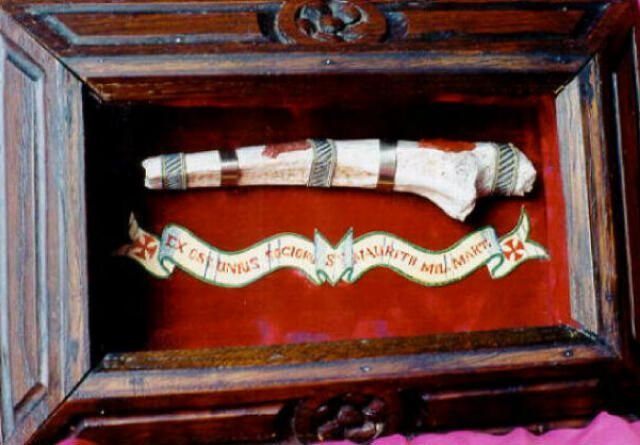
These distinguished relics of an unidentified martyr of the Theban Legion, a companion of St. Maurice, rest in hand carved frames in our family oratory.
The hand painted inscriptions both read:
"Ex Ossibus Unius Sociorum St Mauritii Militari Martyrii"
"From the Bones of One of the Companions of St. Maurice, Soldier and Martyr"
These particular relics bear an abbot's seal; that of a 12th century French monastery called Sainte Sixte. They also have a more recent seal, that of a bishop, probably Canadian, as that is where they ended up some 150 years ago. They were placed in these hand carved frames around that time.
Read the full history of these relics on the Our Family Oratory page, and see El Greco's painting of the martyrdom.